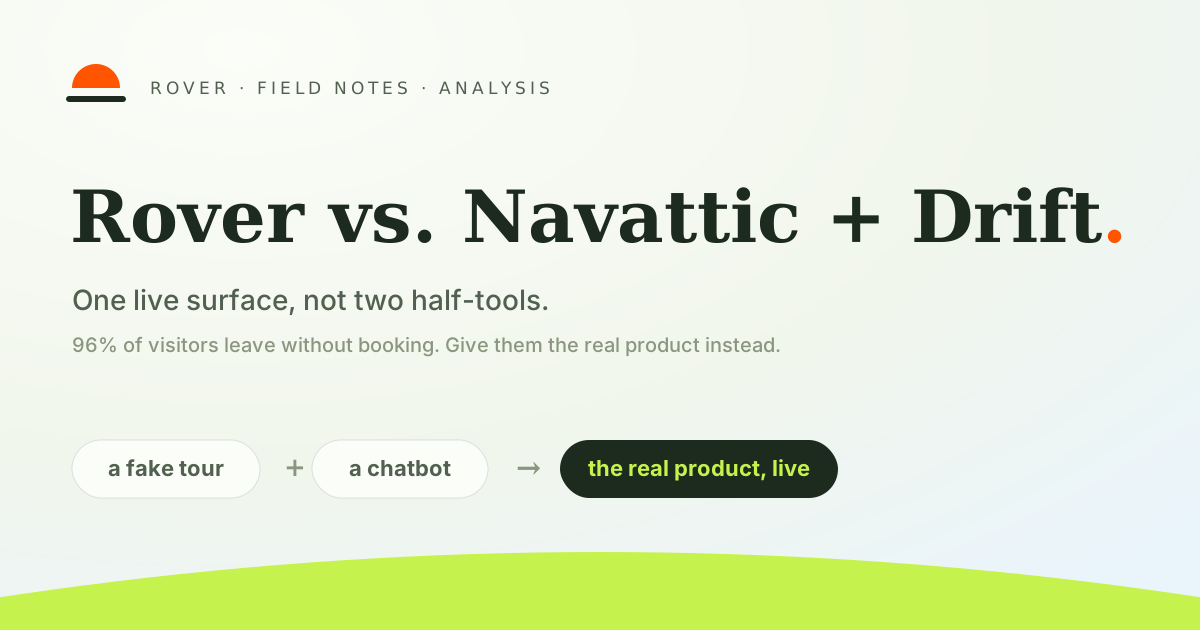
You run growth at a company with a genuinely good product. Traffic isn't the problem; conversion is. Two to four percent of visitors book a demo. The other 96% got curious, found nothing to do on the page, and left.
So you bought two tools to fix it. It didn't work. Here's why, and what the third option looks like.
Why the interactive demo + chatbot stack underperforms
Navattic and Storylane give you an interactive demo: a click-through screenshot with hotspots. It looks great until a buyer asks "but can it do my thing," and it can't, because it isn't the product. It's a slideshow of the product. Completion rates sit in the single digits.
Drift and Qualified give you a chatbot that books meetings, but it can't show anyone anything. It routes and qualifies; it doesn't demonstrate value.
Two tools, two invoices, and the 96% still leaves. You stitched a fake demo to a chatbot and called it a funnel.
What Rover does differently
Rover puts a live agent on your real product. A visitor asks a real question, Rover drives your actual app to the answer, and books the ones who lean in. One converting surface: the demo and the close.
| Navattic / Storylane | Drift / Qualified | Rover | |
|---|---|---|---|
| What the visitor sees | A click-through recreation | A chat window | Your real product, driven live |
| Answers "can it do my thing?" | No | No | Yes, it does the thing |
| Books the meeting | No | Yes | Yes |
| Serves AI-agent visitors | No | No | Yes |
| Setup | Days building a tour | Config | A script tag, live the same day |
| Typical annual cost | ~$12–30K | ~$30–100K | A fraction of the two stacked |
The proof
Rover is #1 on the Halluminate Web Bench at 81.4%, ahead of OpenAI's and Anthropic's agents, with a 3.39% infrastructure-error rate versus 20–30% for CDP-based approaches. It runs in production on Wix, polpo.sh, and the Tool Use podcast today. On our own site, one embedded Rover handled 17,063 real interactions, 213 of them from autonomous AI agents.
And there's no implementation project. It installs like a tag and works like an operator: live the same day, tuned to your top flow in days, proving your conversion number over the pilot.
Frequently asked questions
Is Rover an interactive demo tool?
No. It's a live agent on your real product. Interactive demo tools replay captured screens; Rover operates the actual application, so it can answer questions no pre-recorded tour anticipated. If you're comparing tour tools to each other, read Navattic vs. Storylane.
Can Rover replace our chatbot too?
Yes. Rover holds the conversation and drives the product and books the meeting: the jobs you currently split across a tour tool and a conversational-marketing bot. One surface, one vendor, one number to judge it on.
What does it cost compared to the stack?
A demo platform plus an AI SDR typically runs $60–200K a year stacked. Rover is priced to land well below what it replaces, sales-led, with success-gated pilots a VP can approve alone. Talk to us, or see how we price.
See it on your own site. That's the whole pitch. Book a live demo →