
 Add to Chrome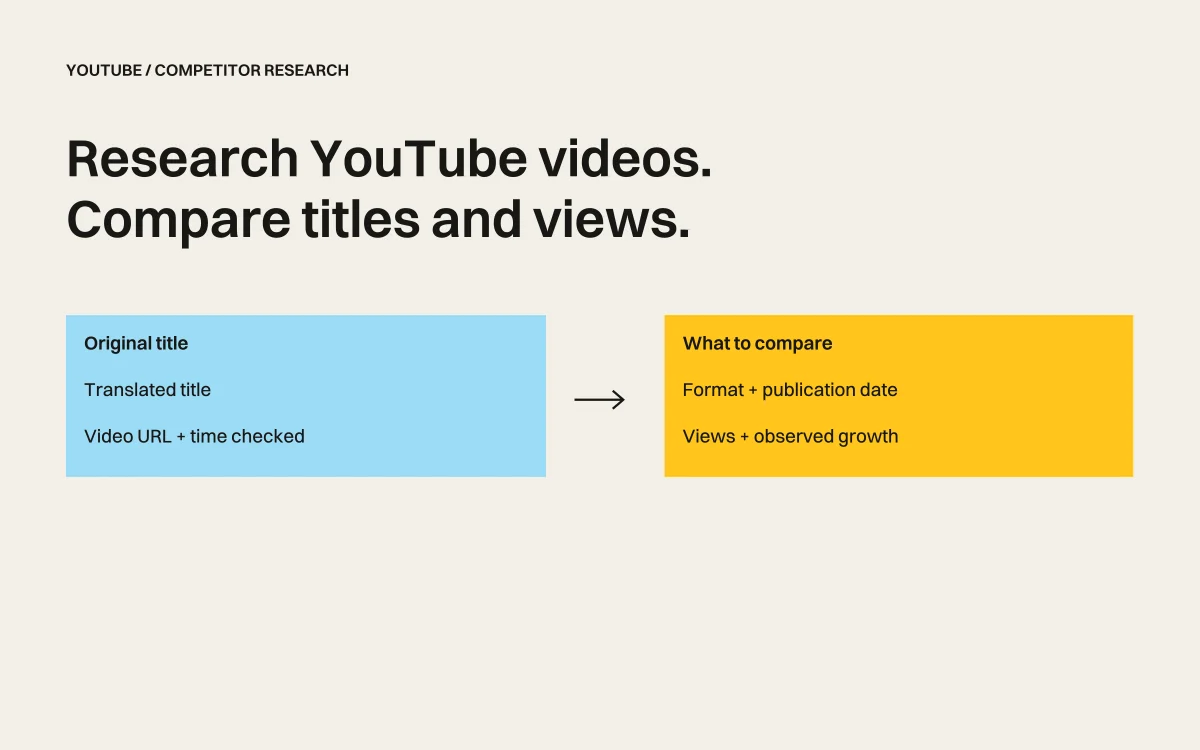
A list of popular videos gives you links. A useful research brief explains what to inspect, how the videos compare, and which idea your team could test next.
Retriever AI can collect the source material while you set the question: a format, a game, a market, or a group of competing channels. Start with ten videos and keep every conclusion tied to a source.
Watch the Japan gaming-research example
Our December 4, 2025 recording uses a MrBeast creative-research scenario: gather Japanese gaming videos, translate titles, and look for unusual performance. It is our demonstration, with no claim that MrBeast commissioned or endorsed it.
Research video ideas from Japan’s gaming scene.
A MrBeast-inspired brief: translate titles and compare Japanese gaming videos. Recorded December 4, 2025.
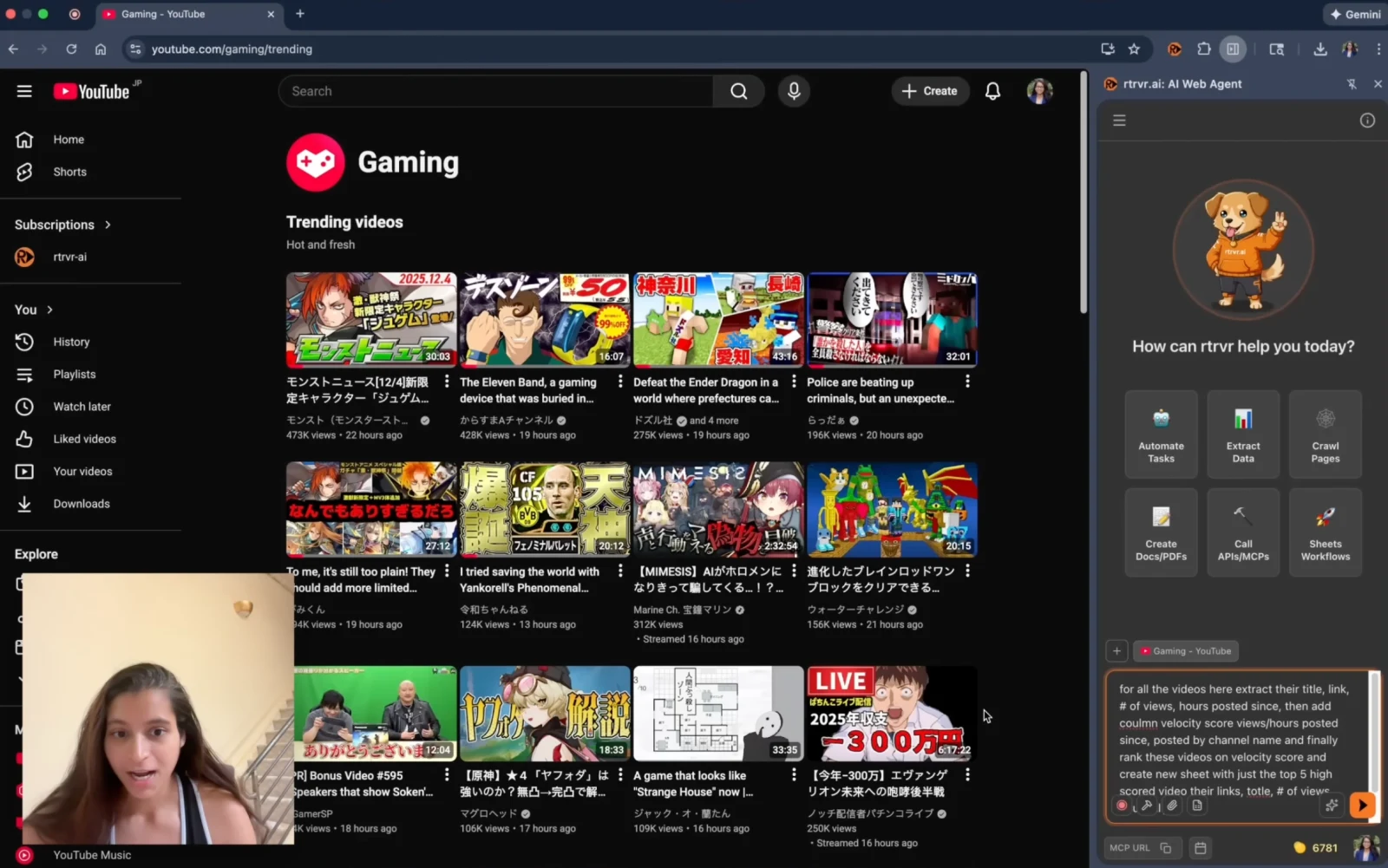
The recording uses the discovery surface available then. For a new run, supply current channel or video URLs and record how you selected them. Do not assume an old Trending tab or ranking still exists in the same form.
Build a comparable sample
Pick one format and a time window. Long videos, Shorts, and live streams should not be treated as interchangeable observations. A search result or recommended feed is also a sample, not a complete ranking of a country’s viewing habits.
A small research table should contain the video URL, channel, original title, translated title when needed, publication date, displayed views, format, duration, and time checked. Add the full description if the brief needs links, sponsors, or context from it. Mark missing fields clearly.
Download the blank YouTube research template to organize your first sample.
Copy this prompt
Research these ten YouTube videos or channel pages: [URLs]. Focus on [topic] published within [date range]. Return video URL, channel, original title, an English translation if needed, displayed publication date, views, format, duration, full description, and time checked. Expand the description where available. Keep original text beside translations. Mark unavailable fields as unknown. Do not subscribe, comment, or contact anyone. Return a table and CSV, with the number of videos checked and any unresolved pages.
Open a few rows yourself before expanding to 25 or 50 videos. Check a translated title against the original, expand a description, and confirm that the video list follows your date and format rules. Sheets workflows can help repeat the same collection across an approved list.
Separate popularity from growth
A large view count tells you how many views are displayed when you look. It does not tell you how quickly they are arriving now.
The demonstration uses the phrase “viral velocity.” For your own report, define the calculation:
| Measure | Calculation | What it can tell you |
|---|---|---|
| Lifetime average views per hour | Displayed views ÷ hours since publication | A rough age-normalized average, when the timestamp is precise enough |
| Observed growth per hour | (Second count − first count) ÷ hours between checks | Growth over the measured interval, using the same video and count definition |
| Relative performance | Video views ÷ median views of a comparable channel sample | A rough outlier signal within that sample |
Rounded counts and vague publication times make these estimates less precise. Keep the raw observations. Two checks can measure change; one check cannot establish acceleration. A newer video also has less observation time, so compare age as well as format.
Ask for ideas with an evidence trail
From the checked table, propose three original video ideas for [audience]. For each, cite two source videos, explain the pattern you noticed, and state what remains uncertain. Separate title or format observations from claims about the video’s actual content. If you did not inspect the video or transcript, say so. Do not claim that a translated title proves the same idea will work in another market.
Now the creative team has something to evaluate: an idea, a small set of references, and a reason to test it. Views alone cannot establish that the hook, editing, or thumbnail caused the result.
Continue from research to production
Use the TikTok analysis guide to compare a creator’s recent posts with pinned hits. For Instagram discovery and draft replies, start with the social workflow.
Our image-and-publishing recording shows a later stage: generating assets and publishing across several platforms. Keep that separate from research. Review the copy, image, account, and destination before authorizing a post. The recording is from January 2026; its competitor pricing and access commentary is historical.
Free Mode includes supported AI models and Cloud browser time for tasks you start in the extension or Cloud dashboard. No AI API key or paid AI subscription is required. Sponsored cards and a daily fair-use allowance apply. Scheduled rechecks require a paid plan. See current plans and data terms.
Add Retriever AI to Chrome and start with ten videos you can verify.


